
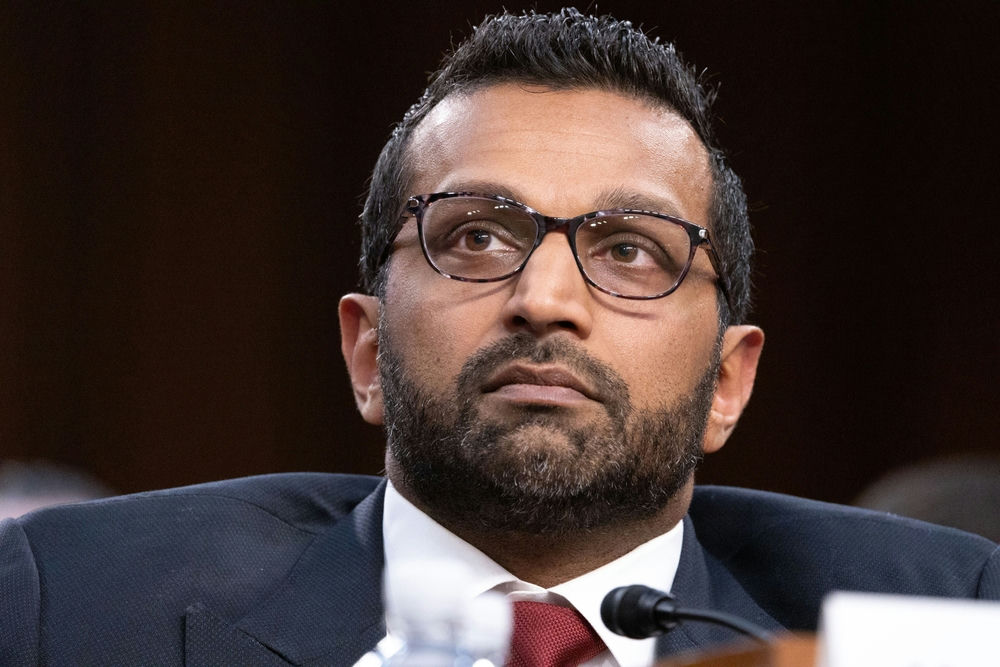
A federal judge just ruled that a televised jab claiming FBI Director Kash Patel spends more time “at nightclubs” than at headquarters is protected “rhetorical hyperbole,” not defamation.
Court Draws a Hard Line Between Insults and Actionable Claims
U.S. District Judge George Hanks Jr. dismissed FBI Director Kash Patel’s defamation lawsuit in Houston after concluding that Frank Figliuzzi’s on-air swipe was not a factual allegation a plaintiff can litigate. Figliuzzi, a former FBI assistant director, had said Patel was “visible at nightclubs far more than he has been on the seventh floor” of FBI headquarters. The court treated that as non-literal commentary—protected speech rather than a verifiable charge.
The ruling matters because defamation law often turns on whether an audience would reasonably interpret a statement as stating facts that can be proven true or false. Here, the judge’s reasoning centered on how viewers process cable-news commentary: sharp, sometimes hyperbolic, and often designed to persuade rather than document. For public officials especially, courts typically require more than insinuations or rhetorical flourishes before allowing reputational disputes to become expensive, prolonged lawsuits.
MSNBC Retracted the Remark, but the Case Still Fell Apart
MSNBC host Michael Lemire retracted the nightclub line on Monday, calling it a “misstatement” and stating the network had not verified the claim. That retraction helped clarify that the comment was not being presented as confirmed reporting. Even so, the lawsuit proceeded into court, where the key question became not whether the remark was unfair, but whether it met the legal threshold for defamation under the First Amendment and applicable standards for public figures.
Judge Hanks ultimately dismissed the suit on Tuesday. At the same time, he denied Figliuzzi’s request to recover attorney fees under Texas’ anti-SLAPP law, which is designed to discourage lawsuits that target protected speech. That mixed outcome is easy to miss: Patel did not win the case, but Figliuzzi also did not receive the financial penalty he sought against the plaintiff. The limited record available does not explain whether either side will pursue an appeal.
Why This Is a Free-Speech Win—and a Warning About Media Incentives
Figliuzzi described the dismissal on Substack as a victory for the First Amendment and free press. On the narrow legal question, the ruling reinforces a long-running principle: exaggerated political commentary—even nasty or mocking commentary—often stays protected when it does not assert provable facts. For Americans wary of weaponizing courts to police speech, that protection is a safeguard against letting judges become referees of every partisan insult exchanged on television.
At the same time, the episode highlights a separate issue that frustrates voters across the spectrum: media incentives reward viral insinuations, while corrections arrive later and with less impact. MSNBC’s on-air retraction acknowledged the network had not verified the claim, yet the original line had already reached a national audience. The court’s approach protects speech, but it does not solve the trust problem created when political coverage blurs commentary with alleged inside knowledge.
The Political Context: High-Profile Officials, High-Noise Information Warfare
The case is distinct from Patel’s separate $250 million defamation lawsuit against The Atlantic, but it lands in the same broader climate: a constant, high-noise struggle over credibility, reputation, and institutional power. Patel’s role as FBI Director makes him a lightning rod, and critics use media platforms to shape perceptions of competence and integrity. Supporters see attacks as part of a broader effort to delegitimize Trump-era appointees and their reform agendas.
Obama-Appointed Judge Tosses Kash Patel’s Defamation Suit Against Ex-FBI Official – Rules the Claim Patel Spent More Time in Nightclubs Is Just “Rhetorical Hyperbole” | The Gateway Pundit | by Jim Hᴏft https://t.co/ZUDWevQZ1C
— Tammie Adams (@tammieadams31) April 22, 2026
With only one primary reported source here, some details remain unclear, including the precise date Patel filed the Figliuzzi lawsuit and whether any appeal is planned. What is clear is the legal signal the ruling sends: courts remain reluctant to convert heated TV rhetoric into defamation liability. For conservatives concerned about politicized institutions, that can feel like a double-edged sword—protecting free speech while leaving public officials to fight reputational battles in a media ecosystem that often prizes narrative over verification.
Sources:
Judge Tosses Out Kash Patel’s Defamation Lawsuit
The judge’s logic and reasoning would be legitimate…if Frank Figliuzzi was simply an on-air commentator. However, the fact that Figliuzzi is NOT a simply on-air commentator but a former FBI assistant director, and therefore assumed to be privy to the facts of the situation with the FBI director completely undermines that position. Further, the judge erred even within his own logic: vis how the viewing/listening public receives such commentary. The recent violence triggered by media incitement is not speculative; it’s been proven beyond all reasonable doubt. These facts leave the situation wide open for appeal to the higher courts and I certainly hope the FBI Director files an appeal.