
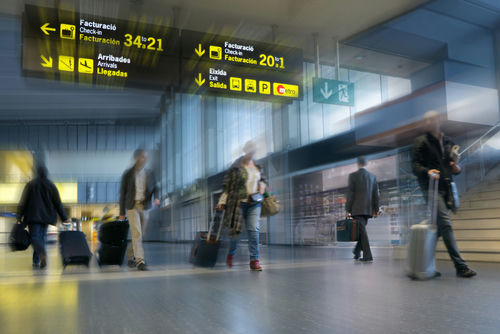
Washington is toying with a pressure tactic so blunt it could turn off the international lights at airports in New York, Los Angeles, Chicago, and beyond—unless their leaders stop shielding illegal immigrants from federal law.
Story Snapshot
- Homeland Security’s chief has openly discussed yanking customs officers from “sanctuary city” airports, which would choke off international flights.[2]
- The idea is pitched as leverage: cooperate with federal immigration enforcement, or lose the privilege of handling foreign arrivals.[2]
- Travel and business leaders warn of economic havoc and massive disruption for ordinary travelers if the plan ever goes live.
- For now, it remains a serious trial balloon—no final order, but very deliberate signaling about what could come next.[1][2]
Homeland Security’s New Pressure Point: The Jetway
Homeland Security Secretary Markwayne Mullin has done something most Cabinet officials avoid: he said the quiet part out loud on national television.[2] He confirmed that his department is “drawing up” options to stop processing international travelers at airports in jurisdictions that advertise themselves as sanctuary cities.[2] Those are the places that limit cooperation with federal immigration enforcement once people step off the federal side of the border and into local control.[2]
Customs and Border Protection officers are the federal gatekeepers who make an airport an international gateway; without them, arriving flights from overseas cannot legally unload passengers into the United States.[2] Mullin’s logic is blunt: why should Washington keep pouring federal resources into ports of entry where local leaders refuse to help remove criminal aliens once they clear the customs hall?[2] From an enforcement perspective, he is threatening to shut the spigot where cities benefit most—travel, trade, and prestige.
How Turning Off Customs Turns Off a City
Law firm analysis summarizing Department of Homeland Security (DHS) discussions explains the core mechanism: stop processing international travelers at key sanctuary hubs, and international travel at those airports grinds to a halt.[1] Think John F. Kennedy International, Los Angeles International, Chicago O’Hare, San Francisco International—giant nodes for business, tourism, and cargo.[1] Airlines cannot simply wish new customs capacity into existence; they must go wherever the federal government decides to staff lawful ports of entry.
Reports note that DHS is not talking about a minor staffing shuffle.[2] Travel industry leaders warned that removing or sharply reducing customs personnel at these hubs would have a “devastating effect” on airlines, tourism, and the broader economy, with delays, diversions, and canceled routes rippling across the system. For a political town that usually moves in half-measures, that level of disruption is the point: sanctuary jurisdictions would feel real pain if they insist on ignoring federal immigration detainers while enjoying the perks of being global gateways.[2]
Signal or Serious Plan? What We Actually Know
Despite the heated rhetoric on both sides, DHS has not issued a formal order, legal memorandum, or implementation directive spelling out exactly how this would work.[1][2] The secretary’s comments and subsequent coverage consistently describe the idea as “under consideration” or a floated option, not a signed decision.[1] That matters; a television statement is political leverage, but an official directive would trigger lawsuits, airline contingency plans, and immediate pushback from affected mayors and governors.
Even so, this is not idle bar talk. Multiple outlets, including immigration specialists, describe the discussion as part of a broader enforcement strategy to regain leverage over sanctuary jurisdictions by using operational choke points, not just angry press releases.[2] Earlier efforts have focused on funding, data access, and enforcement surges in uncooperative cities.[2] Targeting airports is qualitatively different. It reaches beyond city hall to touch business elites, frequent fliers, and unionized airport workers—constituencies that often lean left but do not tolerate chaos in their travel schedules.
The Clash: Enforcement Leverage vs. Collective Punishment
Opponents of the idea frame it as collective punishment that hits ordinary travelers and local economies instead of the politicians who signed sanctuary ordinances.[1] Travel executives emphasize that millions of flyers who have nothing to do with immigration policy would face higher prices, longer trips, or rerouted flights if these hubs lose their international status. Sanctuary leaders argue that local limits on immigration cooperation are about trust with immigrant communities and public safety, not defiance for its own sake.[1]
🚨WOW: All sanctuary city access to international flights could soon be BLOCKED as DHS Sec. Mullin reveals they're "drawing up plans" to do just that.
I voted for this!
Follow: @BoLoudon pic.twitter.com/XKKdiBo4pY
— Bo Loudon (@BoLoudon) May 27, 2026
From a conservative, law-and-order perspective, Mullin’s threat lines up with a basic fairness instinct: jurisdictions that refuse to help enforce federal law should not enjoy unlimited federal perks at everyone else’s expense.[2] The legal question is narrower: the federal government clearly controls customs staffing, but courts would likely be asked whether using that control explicitly to coerce local policy crosses a line.[1] Until a judge rules, this remains a high-stakes staring contest—one where the next move could upend how Americans, and the world, fly into the country’s biggest blue cities.
Sources:
[1] Web – DHS floats plan to block international flights into sanctuary cities
[2] Web – Could International Travel Be Halted in Sanctuary Cities?