
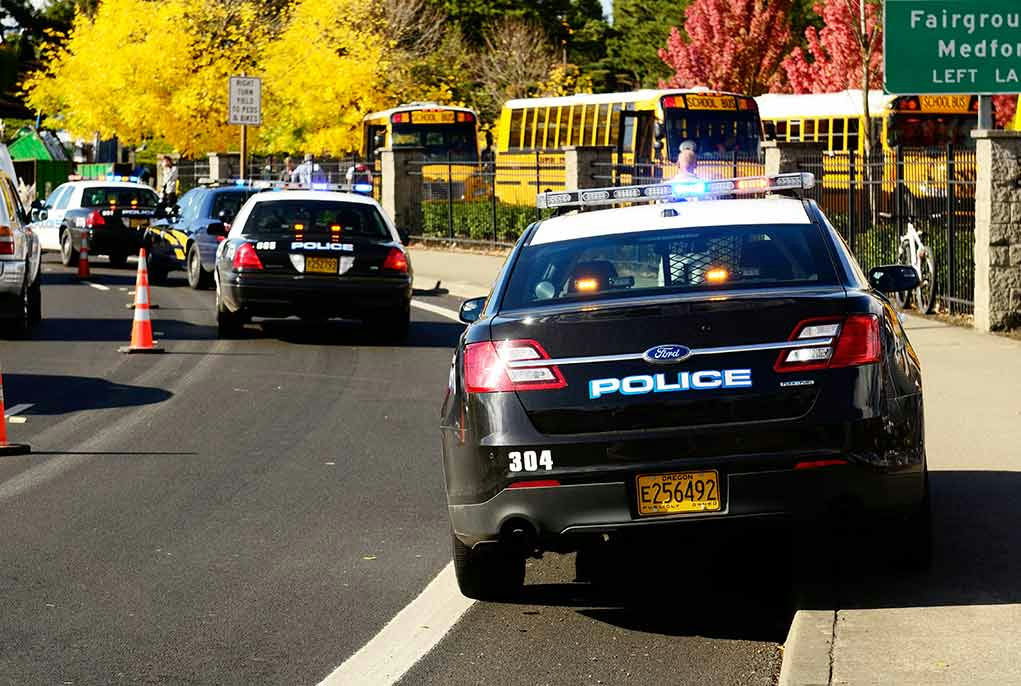
School buses that once just hauled kids and backpacks may soon quietly haul a rolling database of your movements for the government to search.
Story Snapshot
- A private vendor has wired tens of thousands of school buses with always-on, AI-driven cameras in the name of child safety.
- Leaked plans indicate those same cameras could be upgraded into roaming license-plate readers feeding law enforcement searches.
- The shift from ticketing stop-arm violators to tracking every passing car fits a familiar pattern of “purpose creep” in surveillance tech.
- Parents, drivers, and taxpayers must decide whether this crosses a constitutional and cultural line on privacy and government power.
How a child-safety tool quietly blanketed school buses with cameras
BusPatrol, a private company that brands itself as “America’s #1 school bus safety program,” has installed artificial intelligence camera systems on tens of thousands of school buses across dozens of states.[5][2] Districts sign on because the technology automatically records cars that illegally pass buses when the stop arm is extended, capturing the vehicle’s license plate in high definition so a citation can be mailed.[1][3][7] That solves a real problem: impatient drivers routinely blow past stopped buses and put children in the road at risk.[1][2]
Public-facing descriptions are comforting and narrow. BusPatrol explains that its automated stop-arm enforcement works by detecting vehicles that pass while the stop sign is out, then sending an evidence package and plate number to law enforcement for review before any ticket goes out.[3][6][7] A Pennsylvania district’s explanation to parents mirrors that description almost word-for-word.[6] Cameras mounted on the sides of buses are framed as safety gear, not general surveillance. Most adults stop reading right there and assume the story ends.
40,000+ school buses may become moving surveillance cameras.
The company behind them, BusPatrol, wants to scan every car they pass and hand the plate and location to police, usually without a warrant.
The data is being lined up for Axon. The motive, a source says, is revenue,… pic.twitter.com/KsAI5FQf8N
— Conscious (@conscious_spend) May 27, 2026
Leaked plans show the next phase: roaming police plate trackers
Reporting based on leaked internal documents paints a very different picture of where this system is headed.[2][4] According to that investigation, BusPatrol plans to turn those same cameras into full-blown automatic license plate readers that scan “the license plates of all vehicles the buses drive past” along their routes, not just those committing stop-arm violations.[2] The company would then allow law enforcement to search that location-linked plate data, effectively transforming school buses into mobile tracking platforms.[2][4]
The leak also indicates BusPatrol has already explored data-sharing with Axon, a major law enforcement technology contractor known for body cameras and digital evidence systems.[2] Internal discussions reportedly acknowledge that this expansion will be controversial, including concerns about immigration enforcement agencies mining license-plate databases, even as the company strategizes how to sell the plan under the banner of protecting children.[2] That mix—quietly planning broad data collection while publicly emphasizing kids and safety—should raise red flags for anyone who cares about transparency and limited government.
From narrow enforcement to mass data collection: classic purpose creep
The evolution from a narrowly tailored child-safety tool to a roaming surveillance grid tracks a pattern that civil libertarians have been warning about for years. First, a technology is rolled out for an emotionally compelling, limited use: catching drivers who endanger children at bus stops.[1][2][3] Then, once the hardware is in place and the revenue stream from tickets is flowing, the vendor pitches “expanded capabilities” that conveniently turn the same equipment into a multi-purpose data collection system for police.[2][4] The sunk costs, contracts, and safety rhetoric make it hard for school boards to say no.
BusPatrol openly promotes its ability to “go beyond stop-arm enforcement” and provide districts with “tools and data” that change driver behavior.[5][6] Its technical materials acknowledge that the system can record multiple camera angles, tie footage to time codes, and retain detailed evidence packages.[7] Those features make perfect sense for documenting actual illegal passings, but they also make a mobile license-plate reader network technically trivial to roll out once the political decision is made. That is why the leak is so alarming: it shows the vendor is already thinking like a data broker, not just a safety vendor.[2]
Why conservatives especially should worry about this trajectory
Americans who lean conservative typically talk about three core values in this space: limited government, individual liberty, and strong families. Turning school buses into rolling plate readers undermines all three. A private contractor would help government agencies quietly build a searchable map of where people drive, worship, and associate, without anything resembling a traditional warrant.[2][4] That is precisely the sort of soft surveillance state that the Founders tried to restrain with the Fourth Amendment’s protection against unreasonable searches.
"BusPatrol, which installed AI cameras on tens of thousands of US school buses, plans to convert them into automatic license plate readers and hand the data to cops, turning kids' commutes into a surveillance dragnet." – @alexwg https://t.co/iyGQBrTVKE
— Shelby (@shelbyrealty) May 28, 2026
Parents send their children to school buses, not government data rigs. Most families would never consent, in plain language, to “We will track every car that passes your kid’s bus so police can query it later.” Yet that is effectively what the leaked plan contemplates.[2][4] Common sense says that if the government wants long-term, location-based records of your movements tied to your license plate, it should meet a high legal bar, not piggyback on contracts sold as kid-safety programs and funded by ticket revenue.
What an honest, limited-scope bus camera program would look like
A bus camera program consistent with American constitutional ideals would do a few simple things. First, it would record only when there is a plausible stop-arm violation, not continuously scan every passing plate. Second, it would automatically delete footage and license-plate data not tied to an actual, timely ticket, rather than stockpiling it as a searchable asset. Third, it would prohibit secondary uses and data-sharing arrangements, especially with broad law enforcement databases, absent a specific court order.
Current BusPatrol messaging about child safety and law enforcement review at least nods in that direction, but the leaked roadmap to mobile automatic license-plate readers shows how fragile those guardrails are when profit and policing appetites align.[2][3][6] Voters, parents, and local officials should treat this as a moment of choice. Either keep bus cameras tightly focused on genuine, immediate safety violations, or admit that what rides along with your children each morning is not just a bus, but a slow-rolling piece of the surveillance state.
Sources:
[1] Web – Leaked Plans Show School Buses Could Become Roaming Surveillance …
[2] Web – ‘BusPatrol’ Put AI Cameras in Tens of Thousands of School Buses …
[3] Web – BUSPATROL: THE AI-POWERED SCHOOL BUS SAFETY …
[4] Web – Oakland Privacy: “BusPatrol, which already has A…” – Mastodon
[5] Web – BusPatrol | America’s #1 School Bus Safety Program
[6] Web – How the BusPatrol Safety Program is Different from Traditional …
[7] Web – How Bus Patrol Works – Pottsville Area School District