
NATO’s Ankara summit is turning decades of U.S. burden-sharing demands into a hard 5% spending pledge that finally forces Europe to step up—and tests whether Washington can safely shift more weight off American taxpayers and troops.
Story Snapshot
- All 32 NATO members now hit the 2% defense spending mark, a first in alliance history.
- The Hague summit locked in a 5% of GDP defense and security target by 2035, pushed by Trump.
- European spending is surging, but real combat power still lags and depends on U.S. leadership.
- Ankara will show if Europe can turn money into missiles while America reins in endless commitments.
Trump’s burden-sharing fight finally hits a real milestone
For years, American conservatives watched NATO allies promise more defense spending and then drag their feet while U.S. taxpayers carried the load. That pattern has finally broken. By 2025, every NATO country met or exceeded the long-discussed 2% of gross domestic product defense benchmark that was first set at the 2014 Wales summit. This is a historic shift: only three allies hit that target in 2014, yet now all thirty-two do, showing the Trump pressure campaign has forced real change.
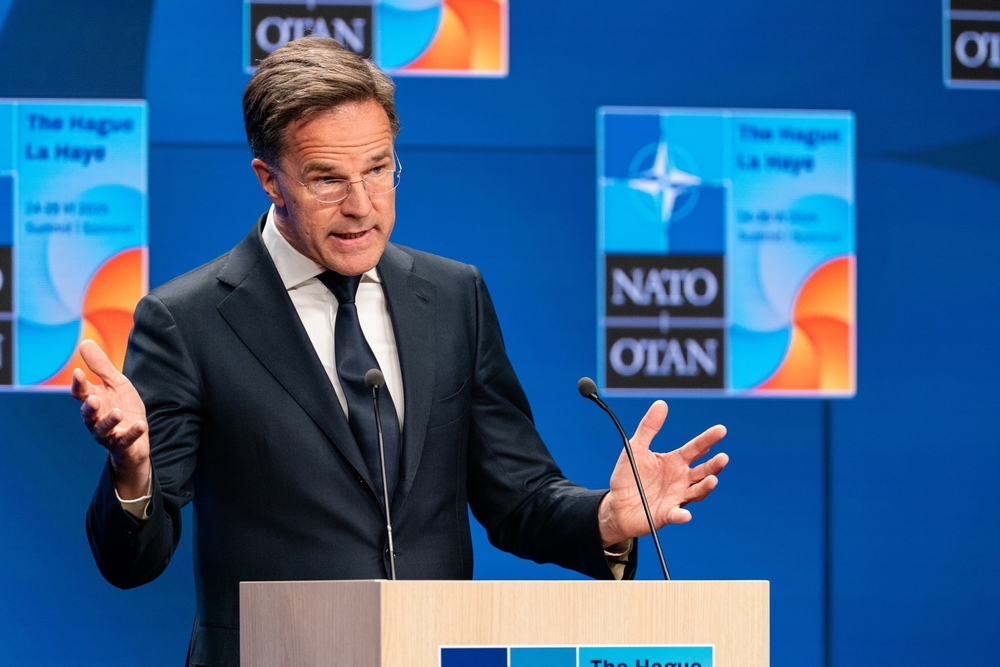
The 2025 summit in The Hague turned that momentum into a much tougher standard. Allies formally agreed to invest 5% of national output in defense and security by 2035. At least 3.5% of gross domestic product must go to core defense—troops, equipment, and meeting NATO capability targets—while up to 1.5% can fund items like cyber defense, infrastructure protection, and strengthening the defense industrial base. This 5% line is exactly the kind of burden-sharing victory many on the American right have demanded for decades.
Europe’s surge in spending still struggles to become real power
European allies and Canada did not just sign a paper promise; they opened their wallets. NATO’s own figures show defense investment from European members and Canada jumped by nearly 20% in 2025 compared with 2024, adding more than ninety billion dollars in constant prices in a single year. Over the past decade their combined spending rose from about 1.4% of gross domestic product to 2.3%, totaling over 574 billion dollars on defense in 2025. That surge finally narrows the long-standing gap with the United States and answers Trump’s “one-sided relationship” complaints.
Yet money alone does not stop tanks or drones. Analysts warn that European defense budgets are bumping against “absorption capacity” limits—industry cannot build fast enough, and recruiting enough trained forces is hard. The European Defence Agency estimates that simply reaching the 3.5% core defense target would push European Union defense outlays from about 381 billion euros in 2025 to roughly 635 billion euros. That scale exposes bottlenecks in factories, logistics, and manpower that must be fixed if the Ankara summit’s huge numbers are ever going to match the real firepower U.S. forces already bring to the table.
Norway’s symbol and Spain’s carve-out show the cracks
One striking data point speaks to European capability and also to uneven effort. For the first time in NATO history, Norway now spends more on defense per person than the United States. That sends a message: some European countries can lead financially when pushed, and Trump-era pressure clearly moved them. At the same time, not every ally signed on to the full burden. Spain secured a formal exemption from the 5% Hague goal, capping its own spending at 2.1% of gross domestic product. That carve-out means “all allies” is not quite literal and keeps questions alive about how evenly risk and responsibility are really shared.
These mixed signals matter for U.S. conservatives who want strong alliances without blank checks. On the one hand, the U.S. share of total NATO spending has already fallen from roughly seventy-two percent a decade ago to about sixty percent in 2025, driven mainly by European increases. That is a concrete step toward fairer burden-sharing. On the other hand, key economies like Germany still have multi-year breathing room to meet targets because their industries and armed forces cannot absorb money that fast. That lag risks leaving real capability gaps that Washington may still have to cover.
Ankara summit: chance to lock in wins and guard U.S. interests
At Ankara, NATO leaders must answer a simple question that matters deeply to American families and taxpayers: will this 5% pledge produce actual hard power that lets the United States scale back without inviting new wars? Secretary General Mark Rutte has warned that allies must turn these huge sums into real military capability, not just budgets and speeches. He points to hundreds of billions in expected extra defense industrial output as Europe moves toward 3.5% core spending and a full 5% total commitment. That framing lines up with Trump’s argument that higher allied spending should let America stop carrying everyone else’s weight.
🚨 IMPORTANT: Zelensky spoke with Trump by phone — and, judging by his remarks, the call went very well
“There is a real prospect of ending this war, and America’s resolve will be crucial. We agreed to continue the conversation in person during the NATO summit in Ankara,” the… pic.twitter.com/KgGfsMhAWL
— NEXTA (@nexta_tv) July 5, 2026
The Ankara agenda goes beyond spreadsheets. Ministers are tying higher spending directly to frontline risks: Russia’s ongoing war, drone incidents on the eastern flank, and threats like Iran closing the Strait of Hormuz. For conservatives, those links matter. They show that smarter burden-sharing is not globalism for its own sake; it is about stopping enemies before they can threaten U.S. soil, allies, or energy security. If Europe can truly shoulder more of its own conventional defense, Washington gains room to secure the border, tackle debt, and rebuild domestic strength without abandoning its leadership role.
Sources:
globalaffairs.org, dailysabah.com, youtube.com, conference-board.org, facebook.com