
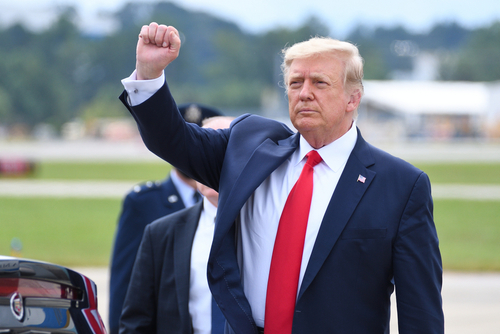
When a longtime Trump critic says saving Israeli hostages and defending Israel’s right to exist made him “cool with Trump,” it shows how real-world crises are breaking the old anti-Trump script for some on the left.
Story Snapshot
- Michael Rapaport says the Hamas hostage crisis made him see Donald Trump as the only real option to bring captives home.
- He now treats Trump with respect because getting hostages home and protecting Israel’s right to exist were “enough” for him.
- Rapaport points to talks with hostage families and his activism as the turning point in his politics.
- Media and elites still downplay Trump’s role, highlighting how gatekeepers try to control the hostage narrative.
Rapaport’s Stunning Shift: From Trump Basher to Reluctant Supporter
Comedian Michael Rapaport spent years attacking Donald Trump, but the Hamas hostage crisis forced him to rethink his position. After the October 7 attacks and months of captives held in Gaza, Rapaport says he looked at the choice between Joe Biden, Kamala Harris, and Trump and decided Trump was “the only chance” to get the hostages home. He now openly says that is why he stopped insulting Trump, even though he still finds him infuriating. For many conservatives, that shift confirms what they already believed about Trump’s toughness.
Rapaport explains that the horror of seeing Israelis kidnapped and families begging for help pushed him past party lines. He describes watching the crisis drag on for weeks, then months, then more than a year, and deciding that Trump was the only viable option to cut through the diplomatic fog and bring people home. This is not a policy paper or a think tank report; it is a gut-level judgment from someone who had loudly mocked Trump before. That kind of reversal matters in a culture dominated by left-leaning celebrity voices.
“Hostages Home and Israel’s Right to Exist” Were His Bottom Line
Rapaport boils his new stance down to two clear priorities: getting the hostages home and protecting Israel’s right to exist. He told Fox News that those two goals were enough for him to change how he talks about Trump, even if he does not agree with the former president on every issue. He says he fought, begged, prayed, and pleaded “by any means necessary” to bring hostages home, and that what he saw convinced him to stop being disparaging toward Trump. For a conservative reader, that sounds a lot like putting human life and national survival ahead of tribal politics.
Rapaport also admits Trump can still be “infuriating,” but he stresses that actions matter more than personality when lives are on the line. He emphasizes that some voters prioritize different issues, yet his focus was simple: hostages and Israel’s survival. That kind of clarity is rare in Hollywood, where many celebrities preach open borders, endless foreign aid, and “woke” causes instead of hard security. Rapaport’s words cut against that trend, showing that when evil strikes, talk of identity politics fades and basic survival comes first.
Conversations with Hostage Families and Public Activism
Rapaport says his change of heart did not happen in a studio; it happened after deep conversations with hostage families and repeated trips to Israel. He describes “the conversations I had with the hostage families” and “the reality that I saw” as the reasons it became worth it to stop disrespecting Trump. He has reportedly visited Israel nine times in two and a half years and has been a vocal supporter of hostage advocacy efforts. That on-the-ground exposure made the crisis more than a headline to him; it became personal.
His activism went beyond talk. Rapaport took part in a Super Bowl ad campaign with the Hostages and Missing Families Forum, urging Americans to push for hostage release and directing them to a website to take action. Social media clips show him celebrating hostages coming home and calling on viewers to join him in demanding their full return. These moves fit a wider pattern where celebrities use their fame to sway public opinion on high-stakes issues. In Rapaport’s case, that influence now leans toward backing Trump’s role in protecting Israelis.
Media Gatekeeping and the Battle Over the Hostage Narrative
Despite Rapaport’s clear statements, there is still no public record proving Trump had a unique, documented mechanism for hostage releases compared with Biden. Official logs, diplomatic cables, and formal testimony from hostage families have not been released to confirm exactly who did what behind the scenes. At the same time, major outlets continue to frame the hostage deals and ceasefire efforts as driven by the Biden administration, often glossing over any credit for Trump’s involvement. This selective framing frustrates readers who are tired of media downplaying Trump whenever results look good.
These celebs are so rich it doesnt really matter who is president. They wanna work they have to support dems.
Michael Rapaport owns up to getting Trump wrong after years of bashing him https://t.co/yWHky4r8N5
— My Name is TricksR4Kids! (@MyName69868909) July 7, 2026
Researchers warn that celebrity politics can warp public debate, especially when liberal stars push one-sided narratives. In this case, Rapaport breaks from that mold by crediting Trump and challenging the left’s default hostility toward him. However, social media algorithms and content rules can still suppress pro-Trump messages, making it harder for stories like his to reach wide audiences. For conservatives who care about truth, hostages, and Israel’s survival, Rapaport’s pivot is a sign that reality is cracking the old media narrative—even if the gatekeepers fight to keep control.
Sources:
foxnews.com, facebook.com, x.com, instagram.com, tiktok.com, youtube.com