
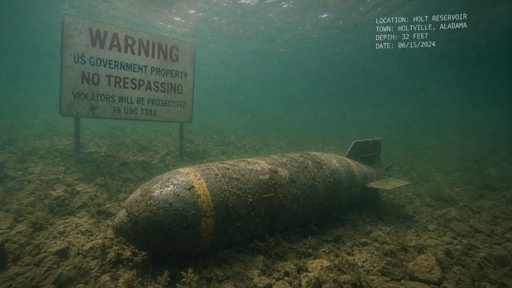
A live grenade-style bomb was found strapped beneath an Alabama dam that helps hold back a city’s drinking water, raising urgent questions about who targeted critical infrastructure and whether Washington is taking these threats seriously enough.
Underwater Bomb Discovery at a City’s Lifeline
Divers performing routine inspection work at the Converse Reservoir dam in Mobile County, Alabama, recently spotted a suspicious object lodged near the underwater base of the structure. According to local reporting and national coverage, bomb technicians later confirmed it was a grenade-type improvised explosive device, deliberately placed rather than leftover military debris. The dam supports the wider Mobile Area Water & Sewer System, helping secure drinking water for area residents, which made the discovery far more serious than an isolated act of vandalism.
Explosive ordnance specialists from regional and state teams were called in, along with federal partners typically involved when critical infrastructure is threatened. Authorities secured the dam and surrounding shoreline while they assessed the device, then rendered it safe, either in place or by controlled detonation. Officials reported no injuries and no immediate damage to the dam or water supply. Residents were told their water remained safe to drink, but the idea of a live bomb beneath a key reservoir understandably rattled nerves across the community.
Critical Infrastructure, Real-World Consequences for Families
Converse Reservoir is part of a broader network that sustains homes, hospitals, churches, and small businesses across Mobile County. Dams like this are classified by federal agencies as critical infrastructure because their failure could bring both flooding and loss of potable water. Since the September 11 attacks, conservatives have warned that America’s enemies—foreign and domestic—view water systems, dams, power grids, and pipelines as attractive targets. This incident shows that threat is not theoretical; someone went underwater and planted a device where families’ water security literally depends on concrete holding.
Past cases have involved hackers probing dam controls, extremists plotting to damage structures, and even attempts to alter chemical levels in water systems. In each instance, officials emphasized that vulnerabilities exist and require constant attention. For years, Washington poured billions into trendy climate agendas and foreign aid while local utilities struggled to upgrade cameras, fences, and underwater inspection regimes. The bomb in Alabama is an example of what happens when essential security quietly competes with political priorities instead of leading the national agenda.
NEW🚨: A grenade-type IED was found underwater at the Converse Reservoir dam in Mobile, AL — federally designated critical infrastructure that supplies drinking water to hundreds of thousands.
Divers found it during routine maintenance, not a tip. No suspect or motive has been… pic.twitter.com/snoEKQFJTV
— Melissa Hallman (@dotconnectinga) May 14, 2026
Ongoing Investigation and What Authorities Are Not Saying Yet
Local law enforcement, working with federal agencies such as the FBI and ATF, has opened a full investigation into who placed the grenade-style IED at the dam. Forensic teams are examining the explosive’s components, looking for fingerprints, DNA, and manufacturing clues that could tie it to known actors or patterns. Investigators are reviewing access logs, any surrounding camera footage, and local intelligence streams, weighing whether the device represents attempted terrorism, targeted sabotage, or some other criminal motive.
Officials have not publicly identified suspects or a clear motive, and no group has claimed responsibility. That lack of detail leaves residents and many observers with more questions than answers. How long was the device down there before divers happened upon it during routine work? Could similar devices exist at other points along the system or at nearby infrastructure sites? Authorities typically hold back technical specifics to avoid inspiring copycats, but conservative readers are right to demand transparency balanced with security, rather than vague assurances that everything is “under control.”
Security Failures, Federal Priorities, and Conservative Concerns
The fact that a grenade-type IED could be emplaced underwater at a dam without detection until a scheduled inspection points to gaps in ongoing surveillance and deterrence. Aging infrastructure nationwide often operates with limited budgets for security personnel, sonar mapping, or remotely operated vehicles that could patrol underwater sections more frequently. Conservatives have long argued that safeguarding water systems and power grids is a core federal responsibility, far more urgent than subsidizing ideological projects or expanding bureaucratic reach into private life.
In this case, local responders and divers did their job and prevented potential catastrophe. Yet the broader system that allowed unknown actors to reach the dam’s base unnoticed deserves scrutiny. If Washington can fund extensive oversight of everyday Americans, from gun owners to small business paperwork, it should certainly ensure that critical dams are monitored so that families are not relying on luck to avoid disaster. The Alabama incident strengthens the argument for prioritizing physical security and resilience over political symbolism in national spending.
For residents of Mobile County and similar communities across the country, the lesson is sobering but clear. Everyday Americans assume that when they turn on the tap, the water is safe and the systems behind it are protected. This underwater bomb proves that assumption can be wrong if infrastructure security is treated as an afterthought. Conservatives who believe in strong borders, secure communities, and responsible stewardship of taxpayer dollars will see this as a warning: protecting dams and reservoirs must move to the front of the line, with accountability for anyone who lets political distractions come first.
Sources:
Bomb discovered at base of dam holding city’s drinking water supply
May 15th 2026 – Presidential Politics – Trump Administration Day 481