
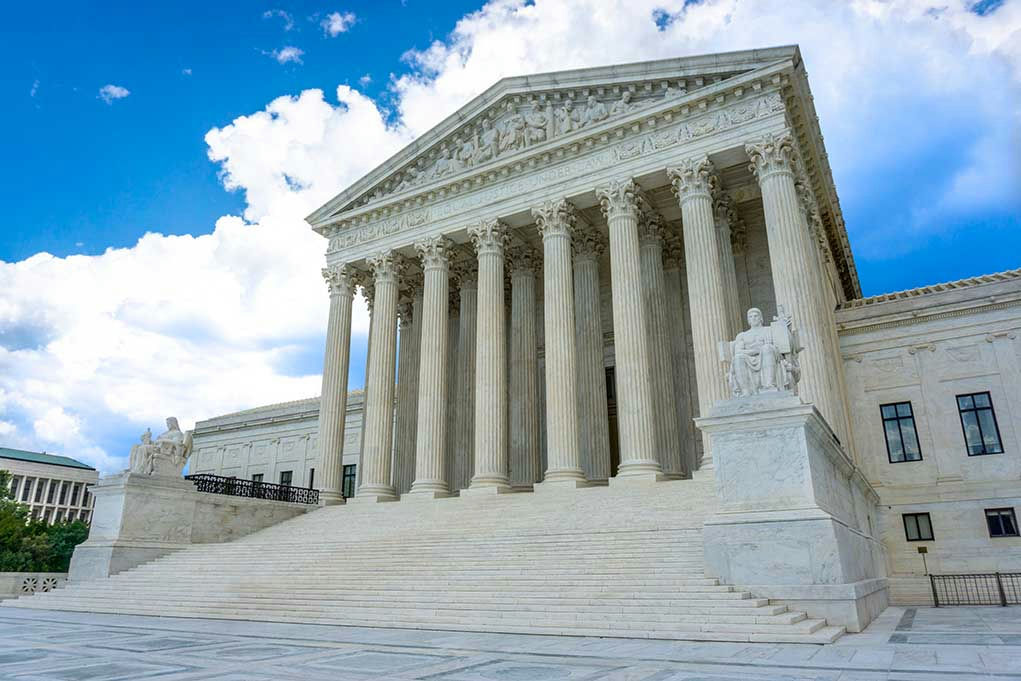
Alabama’s latest court fight over congressional districts shows how quickly redistricting battles can turn into a test of constitutional limits and voting rights. The state is now asking the Supreme Court to let it use a map a federal panel said was racially discriminatory, a ruling that has reignited debate over race, representation, and judicial power.
What The Court Found
A federal district court temporarily barred Alabama from using the 2023 congressional map adopted by the GOP-led legislature, saying the plan violated the Constitution’s Fourteenth Amendment.[1] The judges found that the map, which contained one majority-Black district, intentionally discriminated on the basis of race.[1] The panel instead ordered Alabama to continue using a court-selected map that includes two majority-Black districts, the same lines used in the 2024 elections.[1][2]
The court’s language was unusually direct, with the panel writing that it could not require Alabamians to vote under a plan “tainted by intentional race-based discrimination.”[1] The ruling also rejected the state’s argument that partisan politics, rather than race, drove the line-drawing process.[1] According to the court, lawmakers enacted the map to distribute Black voters across districts in a way that diluted their votes, at least in part because they were Black.[1]
Why Alabama Is Fighting Back
Alabama officials did not accept the ruling as the last word and said they are appealing to the Supreme Court.[1] That move keeps the dispute alive, but it also shows the state is still contesting the legal and factual findings instead of conceding them.[1] For conservatives frustrated by federal court intervention, the case underscores how aggressively judges can override a state legislature when race is the central issue in redistricting.[1]
The broader legal backdrop matters as well. Alabama’s 2023 map came after earlier litigation found the state’s original post-census plan likely violated Section 2 of the Voting Rights Act.[1][2] The court-ordered remedial map used in 2024 produced two Black representatives from Alabama for the first time in history, and the later ruling said the legislature’s replacement plan still failed to cure the problem.[2]
Why This Fight Reaches Beyond Alabama
This case fits a larger national pattern in which redistricting fights become proxy battles over whether states can draw maps without being accused of racial discrimination.[1][2] The Alabama ruling landed in an atmosphere already shaped by Supreme Court decisions that have made these disputes more intense and more politically charged.[1][3] That reality leaves states facing a high-stakes choice: defend partisan map-making, or risk a federal judge concluding the plan weakens Black voting power.
For voters, the practical result is straightforward: Alabama will not switch to the challenged map unless the legal fight changes direction.[1] The panel’s order keeps the court-selected districts in place while the appeal proceeds, which means the legislature’s 2023 plan remains blocked for now.[1] The controversy is likely to stay front and center as the Supreme Court decides whether to step in and whether Alabama can revive the map that federal judges already rejected.[1][2]
Sources:
[1] YouTube – Trump’s redistricting push suffers setbacks in Alabama, S. Carolina
[2] YouTube – Federal judges block Alabama’s congressional map …
[3] Web – U.S. Supreme Court Rejects Unanimous Post-Trial Decision and …