
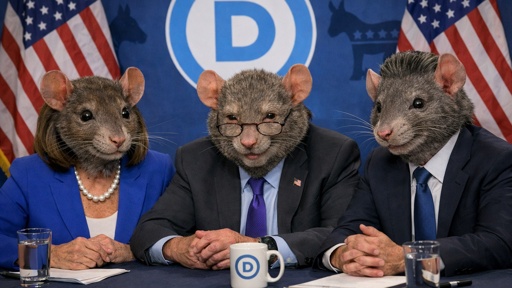
When a deep-blue party punishes its own governor for shortening a Trump ally’s prison term, it exposes just how aggressively both parties now police dissent inside the club.
Story Snapshot
- Colorado’s Democratic governor Jared Polis is formally censured by his own state party for commuting the sentence of former county clerk Tina Peters.
- Democratic lawmakers say the mercy undercuts election integrity and rewards an unrepentant conspiracy theorist tied to Donald Trump’s 2020 fraud claims.
- Polis defends the move as correcting an excessive sentence after appellate judges found legal errors, not endorsing election denial.
- The clash highlights how party machines and legal institutions can both look political, deepening public mistrust in a system run by insiders.
Democrats rebuke their own governor over Tina Peters clemency
Colorado Governor Jared Polis, a Democrat often described as a business‑friendly liberal, is now under formal censure from his own state party after he commuted the prison sentence of former Mesa County Clerk Tina Peters, a prominent 2020 election denier aligned with Donald Trump. The Colorado Democratic Party’s central committee voted overwhelmingly to censure Polis, temporarily barring him from speaking or participating in party events and declaring that his decision “materially harmed” the party’s credibility on defending democratic institutions and election integrity.
Polis cut Peters’ nearly nine‑year sentence roughly in half, making her eligible for parole as early as June 1, even as he acknowledged she committed a crime by allowing illegal access to secure election computer systems.[2] Peters had been convicted by a jury on felony charges tied to tampering with election equipment and unauthorized access to voting machines, part of a failed effort to substantiate claims of widespread fraud in the 2020 presidential election.[2] That combination—clear criminal conduct, symbolic election context, and a high‑profile Trump ally—turned the clemency into a political firestorm.
Party leaders and election officials frame clemency as a threat to democracy
Colorado House and Senate Democratic leaders condemned the commutation immediately, saying they “strongly oppose Governor Polis’ decision to preempt the courts and commute the sentence of a still‑unremorseful Tina Peters.” They emphasized that in March “every House and Senate Democrat signed a letter” urging Polis not to grant Peters any clemency, underscoring that his move directly defied an organized, pre‑existing party consensus.[1] That rare intra‑party revolt helped pave the way for the formal censure vote days later.
Election officials went further, arguing the decision did not just break party unity but endangered the broader system. Colorado Secretary of State Jena Griswold, whose office oversees elections, called the decision a “dark day for democracy” and said Peters “has done more harm to our elections in Colorado” than almost anyone else.[2] The Colorado County Clerks Association reportedly warned that releasing Peters early would send a “demoralizing message” to front‑line election workers and prosecutors trying to protect voting systems from insider sabotage.[2]
Polis points to sentencing errors and proportional justice, not loyalty to Trump
Polis has refused to apologize, insisting his clemency was grounded in law and proportionality rather than sympathy for Peters’ beliefs. He publicly noted that Peters’ actions, while criminal, “did not interfere with any election” or affect ballot counting, but involved illegal access to a secure computer room.[2] Reporting indicates that the Colorado Court of Appeals found error in the original sentencing, concluding the trial judge improperly weighed Peters’ political views and election‑denial speech when deciding how long she should serve.[3]
That appellate finding gave Polis a legal and constitutional hook: he could argue that the punishment crossed a line by effectively punishing Peters’ speech and beliefs, not just her conduct. From that vantage point, clemency becomes a way to correct an excessive or tainted sentence while leaving the conviction itself intact. In public comments, Polis has framed the commutation exactly this way—correcting what he views as an unfairly long sentence, not endorsing Peters’ Trump‑aligned theories about stolen elections.[3]
Why this intra-party showdown worries Americans across the spectrum
The broader pattern behind this Colorado drama taps into frustrations on both the right and the left that the system is run by elites protecting their own power. For conservatives, a nine‑year sentence for an older local official who did not actually change votes looks like another example of “making an example” out of a Trump supporter, only to see Democratic insiders explode when one of their own questions that harshness. For liberals, a Democratic governor undercutting a jury verdict in a sensitive election case feels like elites bending rules for the politically connected.[2]
Both reactions feed the same uneasy conclusion: institutions—from courts and prosecutors to party committees and governors’ mansions—are entangled with partisan incentives and career calculations. The Colorado Democratic central committee framed its censure as defending “democratic institutions and election integrity,” yet its move also signals to every future Democrat that crossing party orthodoxy can carry personal punishment.[1] When mercy, punishment, and internal discipline all look political, ordinary citizens see a system more focused on protecting reputations than on equal justice or secure elections.
Sources:
[1] Web – Democratic Leaders Respond to Commutation of Tina Peters …
[2] Web – Polis shortens Tina Peters’ prison sentence, making her eligible for …
[3] YouTube – Gov. Polis unapologetic about Tina Peters clemency decision