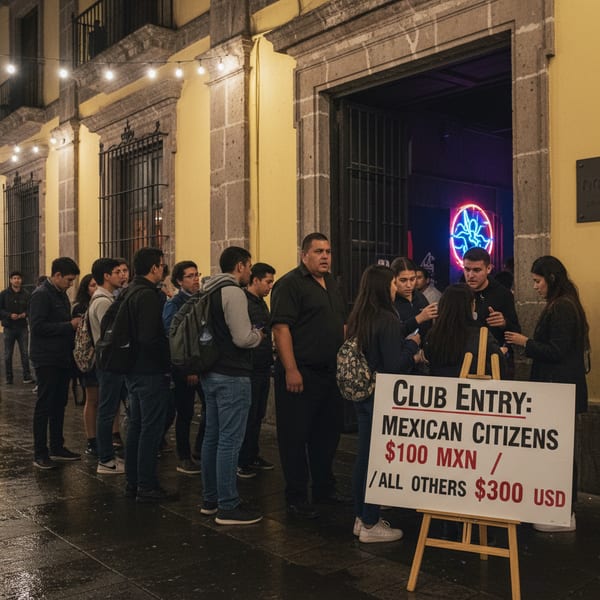
A nightclub in Mexico City has implemented a pricing policy requiring United States citizens to pay 5,000 pesos—roughly $300—for entry while offering steep discounts to nearly everyone else, sparking widespread attention online and raising questions about targeted discrimination against Americans abroad.
Discriminatory Pricing Structure Targets US Citizens
Club Japan, located in Mexico City’s Roma Norte neighborhood, announced the controversial policy on social media. The venue posted that Americans receive no discount from the 5,000 peso cover charge, while citizens from other countries receive a 93 percent discount. Mexican citizens and other Latin Americans receive 95 percent off, paying just 250 pesos. Students and teachers pay only 150 pesos, representing a 97 percent discount. The announcement received more than 26,000 likes and hundreds of comments as the post went viral across social media platforms.


Club Owner Cites Trump Administration Tensions
Club owner Federico Crespo justified the pricing structure as a direct response to political tensions between the United States and Mexico. He stated the policy answers a year of insults directed at Mexico by the United States under President Donald Trump’s administration. Crespo described it as a response to what he called many attacks against Mexico from Trump. The owner also claimed the pricing addresses local concerns about gentrification and rising costs associated with foreign visitors and remote workers who relocated to the Mexican capital during and after the coronavirus pandemic.
American Remote Workers Blamed For Rising Costs
Mexico City experienced a significant influx of American visitors and remote workers as pandemic-era policies allowed many to relocate temporarily or permanently. Neighborhoods such as Roma and Condesa saw growing numbers of foreign residents, contributing to rising rents, increased short-term rental activity, and demographic shifts. Last year, protests against gentrification erupted in the city, with demonstrators criticizing the foreign presence in high-demand districts. Some protests turned destructive with reports of vandalism and anti-tourism graffiti appearing throughout affected neighborhoods.
Revenue Redistribution Claimed
Crespo stated that money collected from the higher American cover charges gets redistributed to club employees. He characterized the policy as helping workers most affected by rising rents, increased cost of living, and longer commute distances to reach their jobs. The club’s social media post framed the differential pricing not as charging Americans more, but as offering discounts to people who need financial assistance. The policy raises legal and ethical questions about nationality-based discrimination in commercial establishments and potential implications for Americans traveling internationally.