
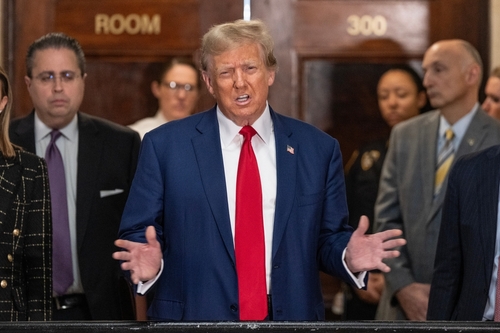
A new $1 gold coin with President Donald Trump’s face on it is about to enter Americans’ pockets, raising fresh fears that the people in charge of our money are now openly using it as a political billboard.
Story Snapshot
- A Trump‑appointed arts commission approved a 24‑karat gold coin and a $1 Trump coin for America’s 250th birthday.
- Treasury officials say a 2020 law lets them bypass the 160‑year tradition against living people on U.S. currency.
- Critics from both parties argue this turns the nation’s money into personal branding for a sitting president.
- The Trump coins highlight how legal loopholes and “elite” insiders can bend long‑standing rules with little public input.
Trump’s Face Comes to America’s Money
On March 19, 2026, the United States Commission of Fine Arts, whose members were appointed by President Donald Trump, unanimously approved the design for a 24‑karat gold commemorative coin featuring Trump’s image. The design shows Trump in a suit, leaning forward with his fists on a desk, paired with a bald eagle on the other side. This decision cleared the way for the United States Mint to start work on Trump‑themed coins tied to America’s 250th anniversary.
Alongside the pure gold piece, the Treasury Department and the Mint have moved forward with a new $1 coin also bearing Trump’s face. Treasury officials say this $1 coin will be legal tender, meant to circulate as part of the semiquincentennial celebrations. Recent reporting shows the Mint preparing production, with the $1 Trump coin described as “gold” or gold‑finished in official photos released to the press. Together, these designs mark a sharp break from how U.S. currency has been handled for generations.
How a 2020 Law Opened a Historic Loophole
Since the 1860s, federal law and policy have barred living people from appearing on U.S. money, based on fears of turning presidents into something like kings. Congress later reaffirmed that only deceased individuals may appear on United States currency, reinforcing a long‑standing tradition that money should honor history, not living power. That is why past presidential portraits on coins and bills have been limited to leaders who have already died, chosen through open debate and legislation.
Trump’s team argues this case is different because of the 2020 Circulating Collectible Coin Redesign Act, passed near the end of his first term. That law lets the Treasury Secretary issue $1 coins with designs “emblematic” of the nation’s 250th anniversary during a limited time window. Treasury lawyers say that vague word gives them discretion to treat Trump himself as part of the national symbol set, especially for coins tied directly to his presidency. They also point to existing statutes that allow the secretary broad power over gold coin designs and inscriptions.
Why Critics Say the Trump Coin Breaks More Than Tradition
Democratic lawmakers, coin collectors, and legal scholars have pushed back, arguing that the Trump coins violate the spirit of the ban on living people on currency and may collide with modern rules tightening that ban. They note that later laws, such as the Presidential $1 Coin Act, require presidents to be dead for at least two years before appearing on certain coins. To them, using an anniversary law to slip a living president’s portrait onto money looks less like celebration and more like self‑promotion with government tools.
Some observers also worry that a Trump‑appointed arts commission and a Trump‑led Treasury are acting with almost no meaningful check from other institutions. The Commission of Fine Arts is supposed to advise on design, not rewrite core norms of American money on its own. Yet in this case, the commission’s unanimous vote and the Treasury’s legal reading together pushed the coin forward despite broad public discomfort and questions of propriety. That pattern feeds the growing belief that an insider “deep state” of elites can bend rules when it suits them.
What This Means for Ordinary Americans
For many conservatives, the Trump coin may feel like a win after years of watching national symbols used to push globalist or “woke” themes they never asked for. Seeing a president they support on a strong, gold‑colored coin tied to America’s birthday can look like a proud statement of the America First idea. At the same time, some on the right dislike any move that seems to blur the line between public office and personal branding, especially when Washington appears to change rules without asking voters.
For many liberals, the Trump coin appears as one more sign that powerful people are willing to twist laws to reward themselves while everyday families struggle with bills, debt, and a shaky economy. They see a president using the machinery of the Treasury and the Mint to literally stamp his face on money, even as the gap between rich and poor widens. On both sides, the shared worry is clear: if the government can quietly rewrite 160 years of monetary tradition for one man’s image, what else can it change without real consent from the people who use that money every day?
Sources:
cbsnews.com, abcnews.com, bbc.com, nytimes.com, nbcnews.com, cfa.gov, youtube.com, thehill.com, npr.org, southfloridareporter.com, govmint.com