
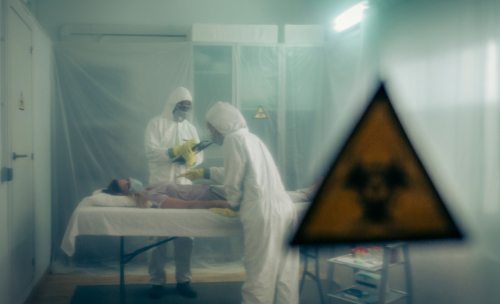
When a former Centers for Disease Control and Prevention director calls Ebola a “perfect storm,” he is really saying the virus is outrunning the people who are supposed to be guarding the gate.
Story Snapshot
- Ebola spreads slowly compared with respiratory viruses, but it hits hard where systems are weakest[2].
- Dr. Tom Frieden warns the latest outbreak has a “running start,” with more cases before response teams even arrive[3].
- Public-health tools can stop Ebola, yet they break down fast when surveillance, trust, and staffing are thin[2][3].
- Americans face very low direct risk, but fragile foreign systems can still destabilize economies and security[2][3].
Why Tom Frieden Sees A Dangerous “Perfect Storm”
Former Centers for Disease Control and Prevention director Dr. Tom Frieden dealt with the largest Ebola epidemic in history in West Africa, which sickened more than 27,000 people and killed over 11,000[2]. He now argues recent Ebola activity looks like a “perfect storm” because the virus has what he calls a “big head start” before global systems even notice[3]. That lag matters: by the time investigators arrive, chains of infection already stretch across families, clinics, and sometimes borders[3].
Frieden focuses on the mechanics, not just the drama. Ebola control hinges on basic blocking and tackling—finding every case, isolating patients, tracing each contact, and ensuring safe burials so the corpse does not seed another cluster[2]. When those steps start late, each missed contact becomes fuel for multiple new infections. Frieden describes the latest outbreak as having a “running start on us,” meaning transmission has moved faster than the bureaucracies and teams designed to stop it[3].
How Ebola Spreads And Why That Cuts Both Ways
Doctors emphasize that Ebola spreads through direct contact with infected bodily fluids, not through the air like influenza or the coronavirus that causes COVID-19[2]. That biology gives health systems a built-in advantage: people do not catch Ebola from a passing encounter in a supermarket. With gloves, gowns, masks, and strict protocols, hospitals in wealthy nations can usually protect staff and patients. That is why experts repeatedly say the average American’s risk from Ebola remains extremely low[2].
The same biology turns deadly where clinics lack gear, electricity, or training. Caregivers in parts of Africa often work without consistent protective equipment, and family members provide hands-on care at home[2]. Cultural traditions around washing and touching the dead can spread infection further when safe burial teams arrive late or meet resistance. In that setting, the fact that Ebola requires bodily fluid contact does not make it easy to control; it makes every bedside interaction a possible flashpoint[2].
Former CDC director Dr. Tom Frieden says Ebola is a 'perfect storm' https://t.co/TpfyaHb2a1
— USA TODAY Health (@USATODAYhealth) May 28, 2026
What Went Wrong Last Time – And Why It Still Matters
The Centers for Disease Control and Prevention’s own account of the 2014–2015 West African epidemic reads like a manual on how delay turns a rural outbreak into a regional catastrophe[2]. Early cases were missed or misclassified, health systems were already weak from years of underinvestment, and international help arrived only after thousands were infected[2]. The agency notes that even a single undetected case could reignite transmission, so every missed contact or unsafe burial became an opportunity for the virus to surge again[2].
Frieden’s current warnings echo the logic of that crisis. He argues that when Ebola gets ahead of tracing and isolation, control becomes fragile and labor-intensive, requiring a level of discipline and coordination that poor countries struggle to sustain[3]. That fragility worries American conservatives who prioritize border integrity and national resilience: if nations with weak systems repeatedly export crises, the United States must either invest in their capacity or brace for recurring disruptions, refugee flows, and pressure to deploy American personnel and resources abroad[2][3].
Is This An Overreaction Or Common-Sense Alarm?
Some commentators push back, arguing that because Ebola is not airborne and has clear symptoms, existing public-health tools are enough and broader fear is unwarranted[2]. They point to the experience of American hospitals that successfully contained imported cases with standard infection-control measures. That record is real and reassuring. It supports a narrow but important point: with preparation and discipline, advanced systems can keep Ebola from spreading widely on their own soil[2].
Agree with Tom Frieden — Ebola control fails when response moves slower than transmission.
Frontline epidemic prevention and control teams are already positioned; they need immediate global backing.
Solidarity with them. Speed is the intervention.
— HealthAsia (@farhadali) May 29, 2026
However, dismissing Frieden’s warning as mere fearmongering ignores how often underestimating early outbreaks has cost lives and money[2][3]. Conservative common sense says you secure the perimeter before trouble grows, not after. Ebola demonstrates that principle in biological form: move faster than the virus and it stays boxed in; move slower and each missed link multiplies your bill. Frieden’s “perfect storm” framing reflects that tradeoff, not a call for panic but a demand for speed, clarity, and competence[2][3].
Sources:
[2] YouTube – Ebola Outbreak Risks ‘Multi-Country Spread’: Former CDC Director
[3] YouTube – Ebola Risk To Americans, Surgeon General Warning On …