
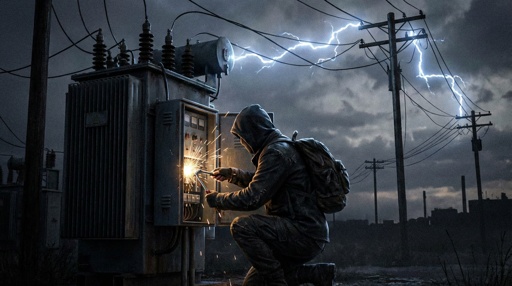
A daring act of sabotage against Berlin’s power grid exposes the escalating conflict between far-left anarchist groups and state authorities.
Sabotage in the Heart of Berlin
Berlin, Germany’s bustling capital, ground to a halt as a massive power outage left tens of thousands shivering in the winter cold. A far-left anarchist group known as the “Vulcan Group” claimed responsibility for this audacious attack. Through a letter verified by authorities, they revealed their sabotage of high-voltage cables as a stand against the fossil fuel industry, framing their actions as a direct challenge to the so-called ruling class.
The damage inflicted was not merely a technical disruption. It was a calculated strike during a cold snap, ensuring maximum impact on Berlin’s vulnerable populace. Repair efforts were hampered by sub-zero temperatures and snowfall, delaying the restoration of power. The outage underscored the city’s reliance on its energy infrastructure and the risks posed by its potential vulnerabilities.
A massive blackout in Berlin: Tens of thousands of people will be without power until January 8 due to sabotage at a power plant, according to media reports.
About 45,000 households and 2,000 businesses were left without power and heat. pic.twitter.com/gT1RVU6IVD
— lone wolf (@MApodogan) January 4, 2026
The Roots of Anarchist Activism
The Vulcan Group’s actions are not isolated but part of a broader historical context. Germany has seen a spectrum of far-left anarchist movements since the 1960s, with roots tracing back to the Red Army Faction. These groups have evolved, often targeting infrastructure as a form of protest against capitalism and fossil fuels. The attack on Berlin’s power grid reflects a continuation of this radical activism, now intersecting with the country’s ongoing energy transition debates.
While there is no detailed history of the Vulcan Group’s past actions, their ability to carry out such a large-scale attack suggests a significant level of organization and intent. Authorities classify them within the anarchist spectrum, indicating prior monitoring, yet this incident marks a dramatic escalation from protest to what many view as terrorism.
Implications for the Future
The immediate effects of the power outage are severe, exposing Berlin’s residents to health risks from the freezing conditions. Emergency shelters have opened to protect the most vulnerable, yet the long-term implications of this event extend beyond the city’s borders. The attack calls into question the security of Europe’s power grids, particularly as nations transition to greener energy sources.
The political ramifications are equally profound. The incident fuels debates on the threats posed by far-left extremism and the need for robust infrastructure defenses. It also places pressure on governments to balance energy policy with security measures, a challenge that will likely intensify as similar groups observe and potentially emulate the Vulcan Group’s tactics.
More than 40,000 Berlin Homes, Emergency services, Hospitals, Schools, etc have lost power in freezing winter as left backed Antifa carried out terrorist attack by burning transmission cables in Dhruv Rathi's Germany
Many lives in danger in freezing cold pic.twitter.com/C4imNAJaAw
— Megh Updates 🚨™ (@MeghUpdates) January 5, 2026