
A California judge’s single ruling against an elite men’s club in the 1990s ignited a decades-long feud that reveals how power, tradition, and reform collide in America’s most exclusive circles.
The Judge Who Challenged the Untouchable
William Newsom III arrived at the California Court of Appeal in 1975 with a judicial philosophy rooted in equality and progressive reform. Appointed by Governor Jerry Brown, Newsom built a career distinguishing himself through landmark rulings on HIV privacy rights and sports liability. His appointment signaled a shift toward judicial activism that would eventually put him at odds with one of America’s most powerful private institutions. The stage was set for a collision between a reformer and a bastion of old-money exclusivity.
Gavin Newsom's father went to war with shadowy Bohemian Grove over members' X-rated antics https://t.co/0jOclZLEyi pic.twitter.com/7xGKLMKTb1
— New York Post Metro (@nypmetro) February 27, 2026
Inside the Bohemian Club’s World
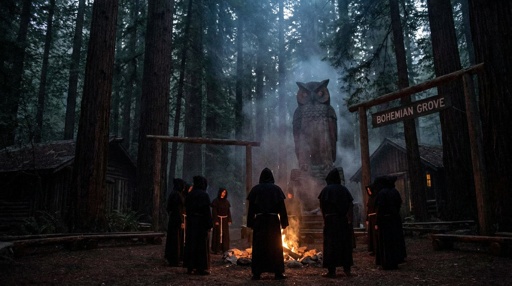
The Bohemian Club began modestly in 1872 as a San Francisco gathering place for artists, writers, and journalists seeking intellectual fellowship. By the early 20th century, it had transformed into something far more exclusive and politically consequential. Members included presidents, Supreme Court justices, and titans of industry who converged annually at Bohemian Grove, a sprawling retreat in Sonoma County. The club’s rituals, including the famous Cremation of Care ceremony before a towering owl statue, became legendary symbols of elite male bonding and secretive power networking.
The club maintained strict male-only membership policies and, critically, refused to hire women for employment positions. This wasn’t accidental discrimination—it was deliberate institutional policy designed to preserve the club’s character and traditions. For decades, this exclusion went unchallenged by the broader legal system, protected by the club’s wealth, influence, and the deference powerful institutions often receive.
The Ruling That Changed Everything
During his tenure on the Court of Appeal, Newsom issued a ruling that struck directly at the club’s no-women employment policy. The decision was legally sound—grounded in California’s evolving anti-discrimination statutes and the nation’s broader march toward gender equality. From a judicial standpoint, Newsom simply applied the law as written. But from the club’s perspective, he had committed an unforgivable transgression against institutional autonomy and tradition.
The timing mattered. The 1980s had already brought protests and lawsuits challenging the club’s exclusionary practices. Newsom’s ruling accelerated what the club feared most: erosion of its absolute control over membership and employment. Women gained access to employment opportunities previously closed to them. The club’s carefully constructed male sanctuary showed its first cracks.
What really goes on at the Bohemian Grove? Workers aren't allowed to have cellphones there, no recording, and aren't allowed past certain areas.
One ex employee told us he once walked into the wrong area and he was told if he didn't leave they would shoot him.
A local riding… pic.twitter.com/fo4KgyRnyh
— Angela Rose (@angelaroosee) February 14, 2026
Power Disrupted, Resentment Festered
What followed was not a legal campaign for reversal but something more insidious: institutional resentment. The Bohemian Club wields influence through its membership roster—Reagan, Nixon, Kissinger, and countless political and business leaders who gather annually to reinforce their networks. Newsom had disrupted this ecosystem. His ruling signaled that even the most powerful private institutions faced judicial limits.
The club’s alleged “hatred” for Newsom, as framed by recent reporting, reflects the deep wound his decision inflicted on an institution accustomed to deference. For an organization built on exclusivity and male-dominated power structures, a judge enforcing gender equality represented not just legal defeat but ideological assault. The animosity persisted even after Newsom’s death in 2018, suggesting the conflict transcended the individual judge to become symbolic.
Legacy and Contradiction
Gavin Newsom’s rise to California’s governorship occurs against this family backdrop—a father who challenged elite institutions, yet a son whose business ventures and political networks intertwine with the very circles his father confronted. Newsom’s Getty family trust connections and PlumpJack investments place him within elite networks, creating an ironic contrast to his “anti-establishment” progressive image. The family’s relationship with institutional power proves more complex than simple opposition.
William Newsom’s ruling stands as precedent. The club continues operating, adjusted policies now explicitly prohibit discrimination based on race or religion, yet male-only membership persists. The legal victory was real, but it revealed limits: courts can mandate employment equality, yet cannot force ideological transformation in institutions built on exclusion.
Sources:
The Bohemian Club – Britannica
Gavin Newsom and San Francisco Money – Los Angeles Times
Gavin Newsom’s Father William Newsom – CBS Sacramento
Gavin Newsom: The Anti-Bohemian Establishment Man – The Independent