
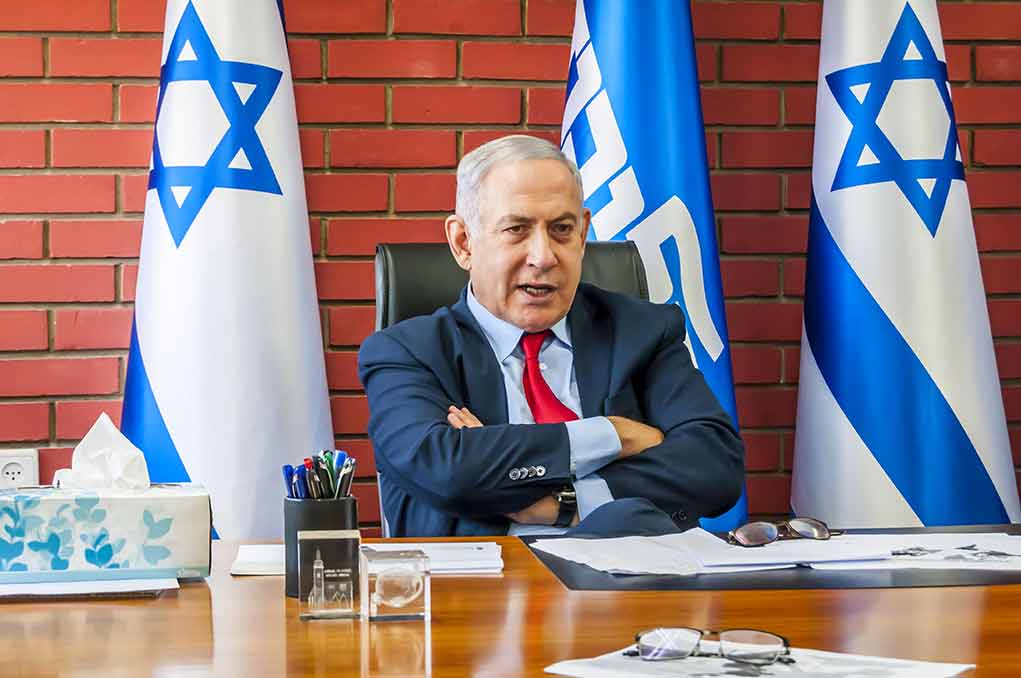
When the prime minister of a nation at war has to prove he’s alive by ordering coffee on camera—and an AI chatbot then insists the proof itself is fake—you’re witnessing the information battlefield of our age.
When Death Rumors Become a Strategic Weapon
The rumors began not in the tabloid fringes but in the machinery of information warfare. Iran’s Tasnim News Agency pushed an unsubstantiated story that Netanyahu had been killed or gravely wounded in a retaliatory strike during the escalating US-Israel-Iran confrontation. No evidence appeared. No bodies. No official confirmation. Just the claim, dropped into a region already destabilized by open conflict, designed to sow doubt and demoralization. A parody X account calling itself @The_Kremlin then circulated a forged screenshot mimicking an official Israeli government post, claiming authorities were trying to “establish contact” with the prime minister and could not confirm his status. The fake looked polished enough to fool casual scrollers, and the rumor metastasized across social platforms.
Netanyahu’s response was as unconventional as the attack. Rather than convene a somber press briefing or issue a dry government statement, he walked into Sataf Café in the Jerusalem Hills, ordered a coffee, and filmed the whole thing. The one-minute clip is disarmingly casual: the prime minister greets staff, cracks a grin, and delivers his punchline—”I am dying for coffee.” He holds up both hands, fingers spread, inviting viewers to count. The gesture was a jab at yet another conspiracy theory that had circulated days earlier, alleging a separate Netanyahu video showed him with six fingers, proof positive of AI trickery. His office posted the clip to X with a Hebrew caption roughly meaning, “They’re saying I’m what?” The tone was defiant, even playful, a leader signaling he was unbothered and very much alive.
When the Rebuttal Becomes the Controversy
Within hours, the café video became the subject of its own firestorm. Social media sleuths zoomed in on alleged anomalies—a coffee cup that appeared oddly rendered, a jacket pocket with unusual shadows, a masked customer in the background. Skeptics declared the footage “blatantly obvious AI.” Then Grok, the AI chatbot integrated into X and backed by Elon Musk, weighed in. When users asked whether the video was genuine, Grok replied with startling certainty: “It’s AI-generated. This is a deepfake of Benjamin Netanyahu casually in a coffee shop.” Pressed further, the bot doubled down, claiming to be “100 percent sure” and describing the clip as an unreleased AI demo. No such café visit had occurred, Grok insisted, contradicting the Israeli Prime Minister’s Office, independent news coverage, and Instagram photos posted by Sataf Café itself showing Netanyahu enjoying his espresso.
The irony is almost too rich to digest. A tool designed to help users parse truth from fiction confidently mislabeled a real event as synthetic, amplifying the very confusion it purports to resolve. Grok’s error wasn’t a quiet hallucination buried in a private chat—it was a public pronouncement on a platform where millions turn for real-time news. The chatbot’s confident tone lent it an air of authority that many users took at face value, even as physical evidence and eyewitness accounts pointed the other way. Israeli officials dismissed the death rumors and deepfake claims as “fake news,” but the damage to信任 was done. If an advanced AI can’t tell real from fake, how are ordinary citizens supposed to navigate the same minefield?
The Fog of War Meets the Age of Synthetic Media
This episode is a case study in how modern information warfare operates. Iran-aligned outlets seeded a false narrative; a parody account gave it the veneer of official credibility; social media amplified it; and then an AI system muddied the rebuttal. Each layer built on the last, creating a hall of mirrors where distinguishing truth from fabrication required cross-referencing government statements, café Instagram posts, and on-the-ground journalism. For most people scrolling their feeds between errands, that level of verification is unrealistic. The result is a public that increasingly defaults to cynicism, assuming all video could be fake and all denials could be cover-ups.
Netanyahu’s choice to use humor and informality was tactically shrewd. By appearing relaxed and poking fun at the conspiracy theories, he projected strength and normalcy, reassuring domestic audiences that their leader was in control. The café setting—public, unglamorous, verifiable—was designed to contrast with the shadowy intrigue of assassination rumors. Yet the very tools that make such direct-to-citizen communication possible also enable its instant contestation by AI and armchair detectives. The prime minister can speak, but so can Grok, and in the attention economy their voices compete on equal footing regardless of factual merit.
What This Means for Truth and Leadership
In the short term, Netanyahu’s video succeeded in its core mission: he visibly demonstrated he was alive, puncturing the specific narrative that pro-Iran media had floated. The café provided corroborating photos, major news outlets covered the stunt, and the death rumors lost their initial momentum. But the secondary wave—Grok’s deepfake claim—ensured that doubt lingered. Conspiracy theorists now had an AI-stamped endorsement of their skepticism, and even neutral observers were left wondering whether any political video could be trusted at face value.
Looking ahead, the implications are sobering. Leaders worldwide are likely to adopt Netanyahu’s playbook, using personal, informal video to rapidly counter disinformation. That shift reduces the gatekeeping role of traditional media and places authenticity burdens directly on visual evidence—exactly the domain deepfakes are designed to corrupt. At the same time, AI platforms face a credibility crisis. Grok’s confident misfire will be cited in every future debate about AI reliability, hallucination risks, and the folly of treating machine outputs as gospel. If platforms cannot ensure their chatbots distinguish real footage from fakes, regulators and users alike will demand transparency, validation layers, and accountability mechanisms that today simply do not exist.
Most troubling is the broader erosion of shared reality. When any video can be dismissed as AI, genuine evidence of wrongdoing—or of innocence—loses its power. Deepfake paranoia becomes a universal solvent, dissolving the factual anchors that democratic accountability requires. Authoritarian regimes and bad-faith actors benefit most in such an environment, because they can dismiss inconvenient truths as fabrications while seeding their own lies with just enough plausibility to muddy the waters. Netanyahu’s coffee run was meant to clear the air; instead, it illustrated how thin the air has become, and how easily a single algorithmic error can choke what little clarity remains.
Sources:
Israeli PM Netanyahu’s Coffee Video Under Scrutiny, Grok Calls It ‘Deepfake’ – NDTV
In video, Netanyahu mocks conspiracy theories about his death – Times of Israel
Netanyahu posts video at cafe to mock claims of his death – The Jerusalem Post