
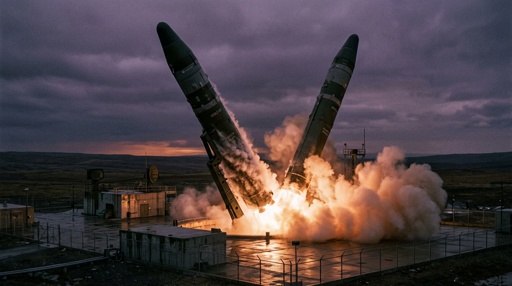
After years of abandonment under previous administrations, the U.S. Navy has revived a revolutionary weapon system that could shift the balance of power against China—proving America’s military innovation thrives when politicians stop interfering.
Revival of Game-Changing Defense Technology
The Navy resumed electromagnetic railgun live-fire trials at White Sands Missile Range in New Mexico during February 2025, collecting critical data on high-velocity projectiles after a six-year testing hiatus. This restart marks a dramatic reversal from 2021 when the previous administration officially paused the program despite its strategic potential. General Atomics now leads development discussions for integrating 32-megajoule railguns onto Trump-class battleships, positioning the technology for air and missile defense rather than offensive ship-to-ship combat. The weapon fires projectiles at hypersonic speeds exceeding Mach 7 using electromagnetic force instead of traditional propellants or explosives.
Overcoming Obama-Era Engineering Failures
The electromagnetic railgun program originated in 2005 under the Office of Naval Research, with BAE Systems delivering prototypes in 2012 for initial testing at Naval Surface Warfare Center Dahlgren Division. Early demonstrations at Dahlgren in 2016 showcased the weapon’s raw power but exposed crippling engineering problems including electromagnetic stress on barrels, massive power requirements, and platform size constraints that plagued development throughout the Obama years. By 2017, Chief of Naval Operations Admiral John Richardson imposed a gag order limiting information sharing amid persistent cancellation rumors, though funding remained stable at $7.6 million for fiscal year 2020 research and development.
Technical Breakthroughs Enable Naval Integration
General Atomics Vice President Nick Bucci confirmed at the January 2026 Surface Navy Association symposium that previous technical obstacles “don’t exist any longer” thanks to advances in electromagnetic aircraft catapult technology. The company solved power generation and barrel wear issues that stymied earlier versions, making railguns viable for Trump-class battleship configurations focused on terminal-phase missile defense. Testing at White Sands provides Army range infrastructure support while Navy commands evaluate potential at-sea trials in the Pacific Northwest on vessels like USS Arleigh Burke destroyers. This strategic pivot from offensive to defensive missions addresses China’s hypersonic missile threats while reducing interception costs since railguns fire continuously as long as electrical power remains available.
New US weaponry on display and it is completely different from anything that has come before it. New technology that lowers costs snd increases firepower! pic.twitter.com/ilcMwFPORS
— ⚔️ Love Me When I’m Gone ⚔️ (@TSH3_) March 12, 2026
Strategic Advantages Against Chinese Aggression
Railgun integration offers American forces a cost-effective counter to China’s expanding arsenal of hypersonic weapons threatening U.S. bases in Guam and throughout the Pacific theater. Traditional interceptor missiles cost millions per shot, while railgun projectiles deliver comparable defensive capability at a fraction of the expense, extending engagement capacity during prolonged conflicts. The February 2025 tests generated diagnostic data enabling Navy planners to finalize specifications for Trump-class battleship armament, though exact performance results remain classified. Admiral Richardson’s 2019 assessment that this weapon system represents “too great a capability” to abandon has proven prescient as contractors work behind the scenes to mature the technology despite the Biden administration’s 2021 cancellation attempt.
Sources:
Navy’s Railgun Now Undergoing Tests In New Mexico, Could Deploy On Ship In Northwest – The War Zone
GA Examining Role of Railguns on Trump-Class Battleships – Naval News
U.S. Navy restarts railgun firing trials in New Mexico – Defence Blog
US Navy Electromagnetic Railgun Programme – Naval Technology