
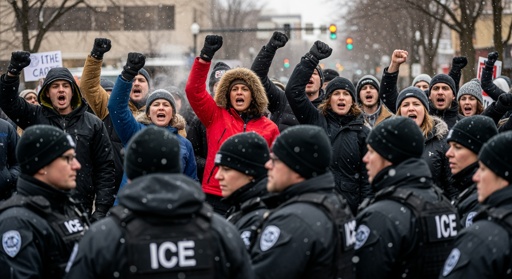
A hacktivist group is daring the federal government by dumping alleged DHS/ICE contract records—turning America’s immigration enforcement supply chain into a public target.
What Was Leaked—and What Hasn’t Been Verified
On March 1, 2026, a group calling itself the “Department of Peace” claimed it hacked a specific DHS office involved in procurement and industry coordination. The released material focuses on contracts and vendor relationships connected to ICE, spanning thousands of companies—from defense and surveillance firms to major tech providers. Reports describe the dataset as including contractor names, award amounts, project descriptions, and business contact information, but not a full personnel roster.
As of March 2, 2026, DHS and ICE had not publicly confirmed the intrusion, and independent verification of the hack claim remained unresolved. That uncertainty matters because the same online ecosystem that circulates real breach data can also circulate compilations, partial exports, or mixed-source information. Even if some records are drawn from public procurement systems, the centralization and searchability can still change the risk profile for contractors and government points of contact.
DDoSecrets and the New “Searchable Leak” Playbook
The nonprofit DDoSecrets published the data dump, continuing a model it used in past releases that aggregated sensitive government-related documents for public access. Security researcher Micah Lee then organized the materials into a searchable format, lowering the barrier for activists, journalists, and adversaries alike to query vendors, dollar figures, and contact fields. That structure can accelerate oversight and reporting, but it can also streamline targeting for phishing or harassment.
Several described contract examples drew attention because they attach big numbers and named vendors to specific DHS/ICE workstreams. Reports cite awards such as $70 million to Cyber Apex Solutions and $59 million to SAIC, alongside references to major firms frequently associated with federal tech and defense contracting. The leak’s focus on procurement may appear less personal than doxing, but contact details paired with contract context can still expose employees to social engineering attempts.
Political Motivation: Protests, Deportation Policy, and Escalating Tactics
The group framed its actions as protest against ICE deportation policies under President Trump’s current administration and cited the killings of U.S. citizens Alex Pretti and Renée Good in Minneapolis by federal agents as part of its stated motivation. The available reporting does not provide independent confirmation or full details of those events inside the leak story itself, but the claim shows how activists are tying street-level outrage to digital intrusion campaigns aimed at disrupting enforcement infrastructure.
For conservative readers, the key distinction is this: immigration enforcement is a lawful federal function, but it increasingly relies on a sprawling public-private tech stack—cloud services, analytics, detention logistics, and surveillance tooling. When that vendor ecosystem is exposed through hack-and-leak tactics, the immediate impact isn’t just political messaging; it’s operational pressure on the contractors and civil servants tasked with executing federal policy. Limited-government conservatives can still recognize the security problem: a state that can’t protect its own systems invites chaos.
How This Differs From January’s “ICE List” Incident
This alleged DHS procurement breach lands in a climate already primed for escalation. In January 2026, a separate “ICE List” leak claimed to expose details on roughly 4,500 ICE and Border Patrol personnel, including names, emails, and roles. Coverage at the time emphasized that much of the information appeared publicly obtainable or compiled, rather than definitively stolen in a clear-cut breach. That earlier incident also drew denial-of-service activity and intensified threats around harassment.
Hacktivists claim to have hacked Homeland Security to release ICE contract data
From TechCrunch:
• Hacktivists "Department of Peace" claim DHS hack, leaking documents online.
• DDoSecrets published data on DHS/ICE contracts with over 6,000 companies.
• Leaked data includes… pic.twitter.com/fUmIOcaVXL— nuprizm (@nuprizm) March 2, 2026
The procurement-focused leak differs because it shifts attention from individual agents to the companies that sell tools and services to DHS and ICE. That may be marketed as “transparency,” but it also broadens the target set to thousands of private-sector entities—many of which employ ordinary Americans with no policymaking power. Without a verified government statement on what was accessed, conservatives should separate two issues: the political debate over immigration enforcement and the non-negotiable need for hardened federal cybersecurity and disciplined vendor risk management.
Sources:
Hacktivists claim to have hacked Homeland Security to release ICE contract data
Hacktivists leak alleged DHS/ICE contract data
How hackers are fighting back against ICE
American Oversight sues TSA, ICE over data-sharing partnership, fight records