
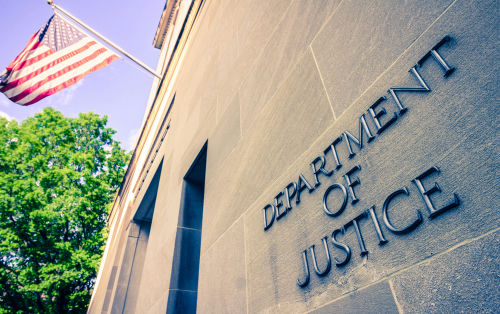
Federal prosecutors say a pay‑to‑play scheme targeted an Army technology campus with padded contracts and hidden kickbacks—another warning that taxpayer dollars and national security can be undermined from the inside.
Story Snapshot
- A federal indictment alleges two Florida men conspired to bribe a U.S. Army employee tied to a Hawaii innovation campus [1].
- Prosecutors say contract costs were inflated to cover bribe payments and funnel money to a personal consulting firm [1].
- The case lists multiple felony counts, including bribery, major fraud, and wire fraud [1].
- The indictment is summarized in secondary reporting; the underlying filing was not provided [1].
Indictment Alleges Bribes To Sway Army Innovation Campus Contracts
Department of Justice reporting says a grand jury indictment filed in the District of Hawaii alleges that from January 2021 to October 2022, two Florida men conspired to bribe a U.S. Army employee linked to the Hawaii-Pacific Innovation Campus procurement process [1]. The report identifies the defendants as Leonard Pick of Palm Beach Shores, Florida, and Brian Kent of Tampa, Florida [1]. Prosecutors allege approximately $1.25 million in intended bribes over five years, aimed at influencing contracting connected to the Army’s technology-testing hub [1]. These are allegations; the case remains to be tested in court.
The same reporting says the alleged scheme involved fraudulently inflating contract costs to hide bribe payments inside government invoices [1]. Prosecutors further allege a separate diversion: approximately $680,000 was added to costs and routed to Kent’s personal consulting business [1]. The Hawaii-Pacific Innovation Campus, described as a site to evaluate emerging technologies, sits at the nexus of national defense and taxpayer investment, making any manipulation of awards or pricing an immediate risk to readiness and public trust if proven [1].
🚨 NEWS ALERT: Two Defense Contractors Arrested for Bribery and Major Fraud Conspiracy Scheme Affecting Department of War Technology Innovation Contracts
The Justice Department announced criminal charges against Leonard Pick, 62, of Palm Beach Shores, Florida, and Brian Kent,… pic.twitter.com/WZjrnOx7D3
— FBI Honolulu (@FBIHonolulu) May 21, 2026
Charges Span Bribery, Major Fraud, And Wire Fraud Counts
According to the article, prosecutors charged Pick and Kent with one count each of conspiracy to commit bribery and major fraud against the United States, plus substantive counts of bribery, major fraud, and wire fraud; the report adds that Kent faces an additional major fraud count [1]. These statutes carry significant penalties because they strike at the integrity of federal spending and the fairness of competitive awards. When contracting is distorted by kickbacks, taxpayers overpay and warfighters risk inferior value—outcomes Congress criminalized to deter insider abuse.
The report frames the conduct as touching the U.S. Army Pacific Command’s project pipeline for the Hawaii-Pacific Innovation Campus, a facility intended to accelerate adoption of new capabilities [1]. If the allegations hold, the harm is twofold: first, corruption erodes competition and merit; second, padded invoices can crowd out legitimate vendors who bid honestly and deliver more for less. Conservatives have long warned that complex procurement systems invite grift unless investigators, auditors, and inspectors general maintain relentless oversight.
What We Know, What We Do Not, And Why It Matters For Taxpayers
The available material is a secondary news summary of a federal indictment, not the indictment text itself [1]. The report provides defendants’ names, alleged timelines, dollar amounts, and charge list, but it does not include bank records, emails, source-selection documents, or the identity of the alleged Army employee [1]. Without the primary filing, readers cannot review the specific statutes cited or the detailed factual proffer. These gaps are common early in white-collar cases and should be filled as the docket becomes public.
Two Florida Men Charged in $1.25M Bribery Scheme to Win Army Contracts in Hawaii https://t.co/OT57JJkBbf
— AQV The Deplorable ❌ (@aqv21) May 22, 2026
Conservative readers should track three questions. First, did any contract awards or modifications actually shift because of the alleged bribes? Second, do invoices, ledgers, or wire confirmations corroborate the $1.25 million bribery plan and the $680,000 consulting diversion [1]? Third, will the Army release procurement records to verify or refute any quid pro quo? Transparency on these points protects taxpayers, deters future schemes, and reassures honest vendors that the playing field is even.
Accountability, Deterrence, And Guardrails For Defense Contracting
The Department of Defense has long warned that procurement fraud siphons funds from critical missions and weakens confidence in modernization efforts. The Defense Logistics Agency’s historical reporting underscores how vigilant oversight, competition, and audit controls are essential to safeguarding supply chains and contract performance across the force [7]. Conservative priorities—limited government, strict stewardship of taxpayer dollars, and merit-based awards—depend on visible enforcement when indictments like this surface, and on due process that separates fact from accusation.
Next steps should be straightforward: release the unsealed indictment and related filings, disclose non-sensitive procurement records, and, where lawful, publish audit trails on pricing decisions. Congress and inspectors general can press for document production and timelines to ensure swift clarity. If the allegations are proven, stiff penalties will reinforce that bribery and invoice padding will not stand. If they are not, the record will show it. Either way, sunlight is the surest ally of integrity in federal contracting.
Sources:
[1] Web – Two Florida Men Charged in $1.25M Bribery Scheme to Win Army …
[7] Web – [PDF] Defense Logistics Agency – Fiscal Year 2019 Annual History – DLA
Seems to be a sign of the TIMES with perverted ARMY people and the like. The Diversification of Military has made these conditions even worse