
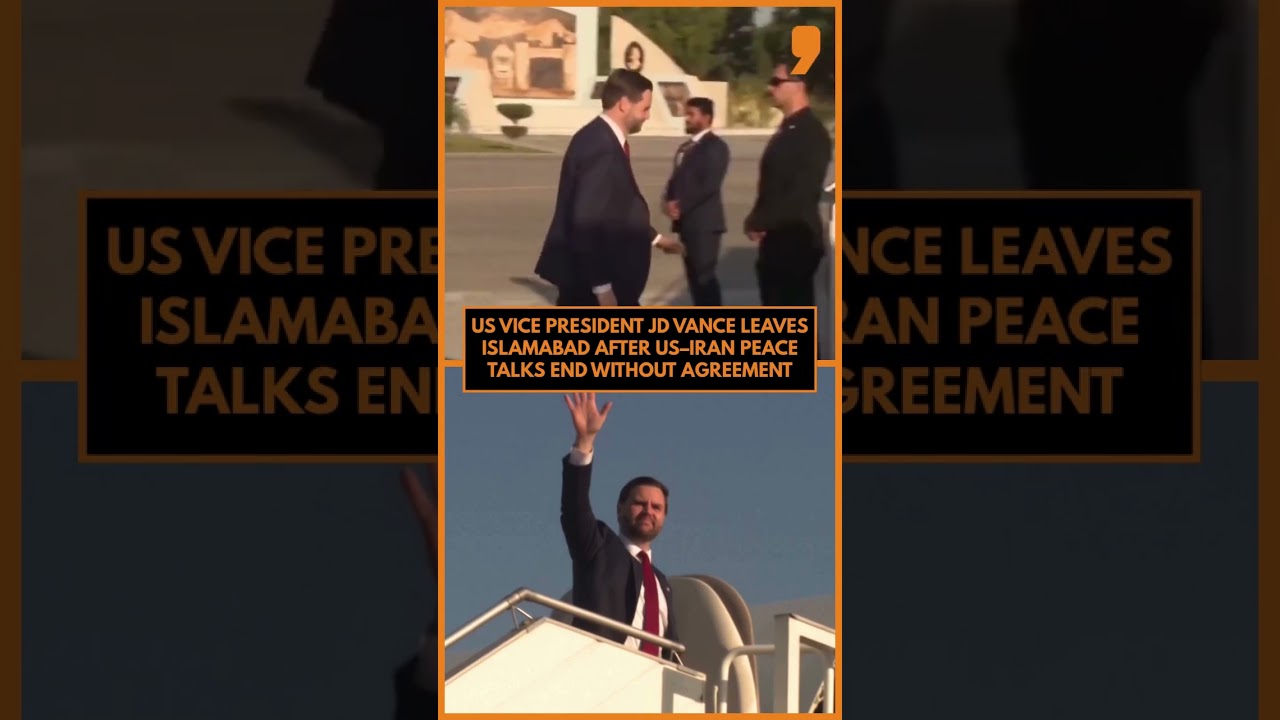
Vice President JD Vance departed Islamabad empty-handed after 21 hours of intensive negotiations with Iran failed to produce a nuclear agreement, marking another breakdown in attempts to resolve the standoff over Tehran’s atomic program and the critical Strait of Hormuz.
Iran’s Non-Negotiable Demands Derail Progress
Iran arrived with a massive 71-person delegation led by Parliamentary Speaker Mohammad Bagher Ghalibaf and Foreign Minister Abbas Araghchi. Tehran presented four absolute conditions before discussions even started: complete sovereignty over the Strait of Hormuz, full war reparations, unconditional release of frozen assets, and a durable ceasefire across West Asia. These weren’t opening positions for bargaining—they were declarations of what Iran considers essential requirements. Iranian state media blamed the collapse on Washington’s excessive demands, while Ghalibaf stated bluntly that goodwill exists but trust does not.
America’s Equally Firm Requirements
President Trump’s framework demanded Iran surrender highly enriched uranium, accept defense capability limits, and fully reopen the Strait of Hormuz. Trump made America’s position crystal clear: no nuclear weapon represents 99 percent of the objective. Vance reinforced this after talks collapsed, emphasizing the need for Iran’s long-term commitment against pursuing nuclear weapons—a commitment Tehran has not provided. The two sides weren’t negotiating different terms of the same deal. They were debating whether any agreement is even possible under current conditions.
The Strait of Hormuz Standoff
The entire negotiation framework centered on one geographic chokepoint: the Strait of Hormuz, through which roughly 20 percent of global oil and liquefied natural gas flows. Six weeks into the conflict, normal commerce through this passage remains effectively blocked. During the Islamabad talks, Iran’s Revolutionary Guard warned that military vessels attempting transit would face strong response. Two American guided-missile destroyers conducted operations in the strait Saturday, marking the first U.S. warship passage since hostilities began. Trump declared America will sweep the strait regardless of whether a deal materializes.
Regional Complications and Future Prospects
Israel’s absence from Islamabad—Pakistan doesn’t recognize the Jewish state—created an impossible structural problem. Iran cannot accept any agreement leaving Hezbollah vulnerable to Israeli bombardment, while Washington cannot bind Israel to terms Jerusalem didn’t negotiate. One diplomatic thread remains: Lebanese and Israeli representatives are scheduled to meet separately at the State Department. If that track advances, it might remove the Lebanon obstacle from broader negotiations. Former State Department negotiator Aaron David Miller assessed that Iran holds more leverage than America and shows no urgency for concessions. Saudi Arabia’s finance minister arrived in Islamabad as an economic support signal, suggesting regional powers view the pressure as genuine despite the breakdown.